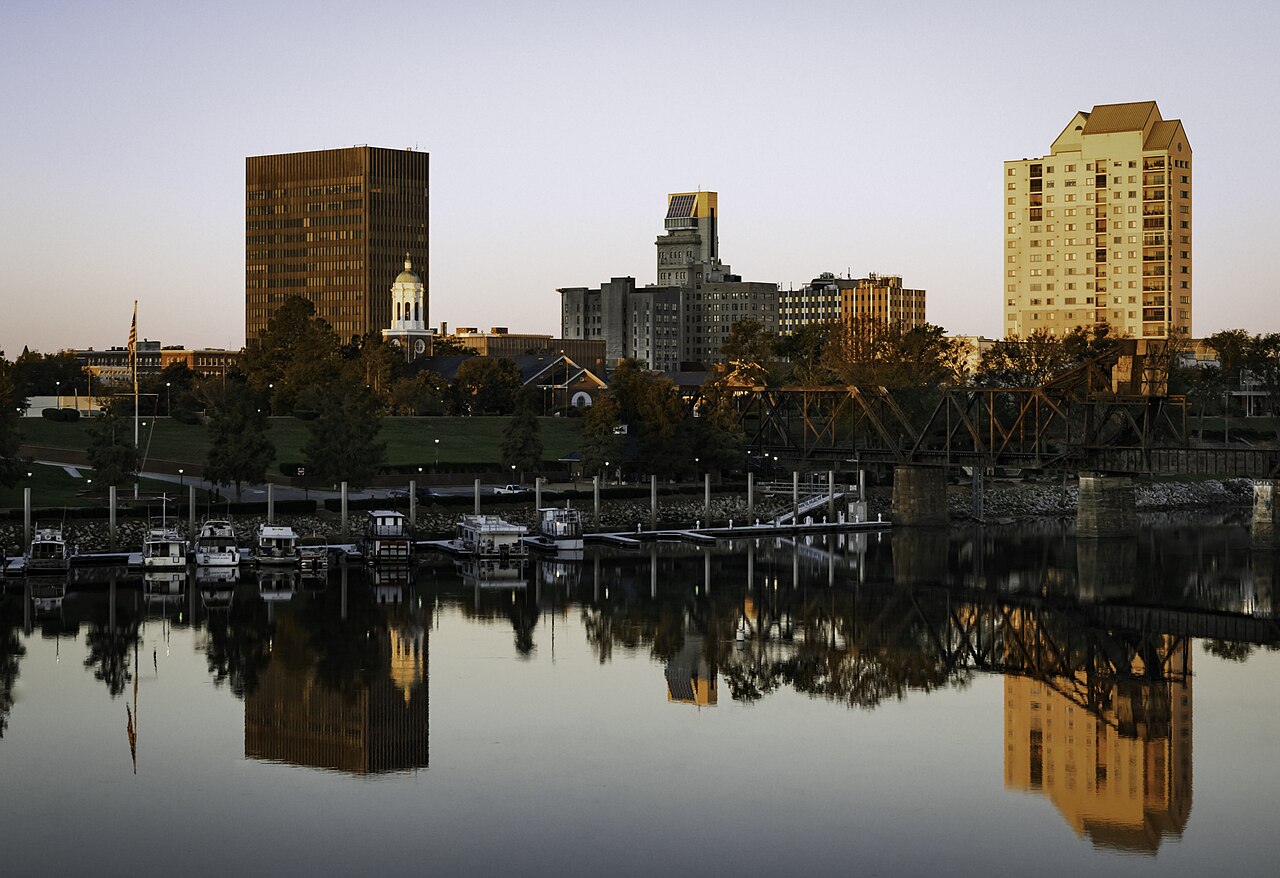
THE 2026 CITY GUIDE
The Complete
Augusta Guide
The practical, sourced reference for newcomers and anyone moving to Augusta, Georgia.
NEW TO THE CSRA?
Get the lay of the land.
Local context for life in Augusta. Three mornings a week.
Free to read. Easy to leave. Opens Beehiiv in a new tab.
START HERE
The four answers most newcomers need first.
POPULATION
201,999Census estimate, July 2025, for the Augusta-Richmond County consolidated-government balance. The city's Envision Augusta plan projects Richmond County at about 217,200 by 2035.
COMMUTE
20–30 minMorning planning estimates: 20–30 min downtown or the medical district to Fort Gordon Gate 6, 25–35 min to Gate 1. Planning estimates, not measured times.
SCHOOLS
Richmond CountyThe county school system, with four countywide magnet schools. Zoning is by exact address.
HOSPITAL
Wellstar MCG478-bed adult hospital plus the 154-bed Children's Hospital of Georgia. Adult Level I trauma.
Last reviewed September 20, 2026.
Augusta is the city the rest of the CSRA orbits: the medical district, the university, downtown, the riverfront, the oldest neighborhoods, and the most varied housing stock in the region. It suits people who want the urban core, medical and university jobs, historic homes, or simply the most housing choice for the money in the metro.
This guide covers the schools, the neighborhoods, the commute, Masters week, and the day-to-day details of living in Augusta-Richmond County. The short version: Augusta gives you the most affordable housing in the metro, the strongest school choice, and the medical district. It asks you to pick your block with care.
Jump to a section
- 01 · Overview
- 02 · Who Augusta suits
- 03 · Commute & getting around
- 04 · Moving checklist
- 05 · Neighborhoods & housing
- 06 · Nearby alternatives
- 07 · Cost of living
- 08 · Schools
- 09 · Healthcare
- 10 · Grocery, dining & shopping
- 11 · Childcare
- 12 · Jobs & working here
- 13 · Parks & daily life
- 14 · Faith community
- 15 · Local economy
- 16 · What makes Augusta Augusta
- 17 · Where to be cautious
- 18 · Key contacts
- 19 · FAQ
Overview
Augusta is a consolidated city-county in east Georgia on the Savannah River, across the water from North Augusta, South Carolina. Augusta and Richmond County consolidated on July 1, 1996, and the consolidated government covers all of Richmond County except Blythe and Hephzibah, which kept their own city governments. That split matters, because a lot of data sources switch between the consolidated-government balance and the county total.
The city's Envision Augusta comprehensive plan (5-year update adopted October 2023, with a 20-year horizon) puts its vision this way: "Augusta-Richmond County is unifying historical values with contemporary growth strategies to achieve and sustain an advantageous quality of life for all." The plan projects Richmond County growing from about 206,000 residents in 2025 to 217,193 by 2035, roughly 5 percent. For context, Columbia County grew 23.4 percent from 2010 to 2021 while Richmond County grew 2.4 percent, which is why the plan treats reinvestment in existing neighborhoods as its central challenge.
- Population: 201,999 in the Augusta-Richmond County consolidated-government balance (Census estimate, July 1, 2025). Richmond County separately was estimated at 206,559. Do not mix the two numbers.
- Character: Augusta is the urban anchor of the metro. It holds the medical district, the university, the state and federal offices, the historic neighborhoods, and the most varied housing stock in the region, from downtown lofts to old Summerville homes. It also carries more visible poverty and higher crime counts than the Columbia County suburbs, which is why neighborhood choice matters more here than anywhere else in the CSRA.
- City business: Day-to-day city business starts at augustaga.gov. Non-emergency city services run through Augusta 311: dial 311 inside Richmond County, or (706) 821-2300 from outside. Hours are Monday through Friday, 7:00 AM to 7:00 PM, with a 24/7 web portal. Police, fire, or medical emergencies always go to 911.
| Figure | Value |
|---|---|
| Consolidated-government population | 201,999 (Census, July 1, 2025) |
| Consolidation date | July 1, 1996 (covers all of Richmond County except Blythe and Hephzibah) |
| City services front door | Augusta 311: 311 in-county; (706) 821-2300 outside; Mon-Fri 7 AM-7 PM |
| Comprehensive plan projection | ~217,200 by 2035 (Envision Augusta, adopted Oct 2023) |
Who Augusta suits
Augusta fits people who want the urban core: medical-district workers, university staff and students, downtown commuters, and anyone who wants the most housing choice for the least money in the metro. Newcomers bound for the base, the hospitals, or the schools all start here too, because Augusta is the region's biggest jobs hub.
Major employers. The metro's biggest job cluster is anchored by Fort Gordon on the southwestern edge, alongside Wellstar MCG and the medical district, the Savannah River Site across the river in South Carolina, the Richmond County school systems, and manufacturers such as Textron Specialized Vehicles. Anyone who needs base access detail, including gates and visitor passes, should use The Fort Gordon Guide.
Drive-time estimates (morning rush planning numbers, not measured drive times):
| From | To | Planning estimate |
|---|---|---|
| Downtown / medical district | Fort Gordon Gate 6 | 20-30 min |
| Downtown / medical district | Fort Gordon Gate 1 | 25-35 min |
| South Augusta / Tobacco Road side | Fort Gordon Gate 5 | Shorter than the downtown run |
The honest fork. Augusta gives you the urban core, the medical district, the most affordable housing in the metro, and the magnet schools (section 8). Columbia County gives you newer subdivisions and higher-rated zoned schools at higher prices. Decide which matters more before you start house-hunting.
Commute & getting around
Augusta is a car city. Everything in the metro is reachable by car, and the daily question is which corridor, which job center, and what time you leave. Learn the road skeleton and most of the region opens up.
The corridors that matter: I-20 runs across the top of the metro. I-520 (the Bobby Jones Expressway) loops the city. Riverwatch Parkway runs to Evans. Gordon Highway runs to the gates and the airport. Washington Road runs through west Augusta and Martinez. Peach Orchard Road and Deans Bridge Road run south.
Augusta Transit runs nine fixed routes: Walton Way, West Parkway, East Augusta, Turpin Hill, Washington Road, Gordon Highway, Augusta Mall, Barton Chapel, and Lumpkin Road (augustatransit.com). Fares, per the official Passes & Fares page:
| Fare | Regular | Discount |
|---|---|---|
| Single ride | $1.25 | $0.60 |
| Transfer | $0.50 | $0.25 |
| Weekly pass | $15 | $7.50 |
| Monthly pass | $50 | $25 |
Cash or money orders only. Passes sell at the Broad Street transfer facility, Monday to Friday 8:00 AM to noon and 1:00 to 5:00 PM, plus the first Saturday of the month. Discounts cover riders 65 and older, students, and qualifying disabled riders with ID. Info line: (706) 821-1719, Monday to Saturday 6:00 AM to 8:00 PM. One caution: transit staff proposed route cuts for 2026, so confirm current routes and Saturday service before you plan your life around a bus.
What the city's plan says. The Envision Augusta comprehensive plan counts 1,374.56 road miles in the county and lists the TIA-funded projects completed since 2018: the Calhoun Expressway repair, the Riverwatch Parkway signal system, the 15th Street and 7th Street bridges over the canal, the Broad Street canal crossing, and the Highland Avenue and Milledgeville Road work. At plan time, 13th Street (RA Dent to Reynolds), Broad Street (Washington Road to Sand Bar Ferry), Greene Street, and the Walton Way crossing over Hawks Gully were under construction. On transit, the plan notes the new facility on Regency Boulevard, a $6.27 million federal grant for five electric buses and charging stations, a microtransit service, and a $1.4 million application to convert the aging bus terminus into an intermodal facility.
Augusta Regional Airport (AGS) (flyags.com) runs year-round nonstops on two carriers: Delta to Atlanta; American to Charlotte, Dallas/Fort Worth, and Washington Reagan (DCA). The airport is actively courting a third airline. During Masters week the schedule expands to about 16 cities (April 5-13, 2026), which locals can also use for their own travel.
Moving checklist
Do these in roughly this order. Everything here is city or county level, so it applies whether you rent or buy.
- Water, sewer, and stormwater: Augusta Utilities Department (city). Set up service before move-in day.
- Electric: Georgia Power serves most of the city. Some addresses near the city edge fall under a co-op instead, so confirm at your exact address.
- Natural gas: Georgia is deregulated. Atlanta Gas Light owns the pipes; you shop certified marketers for the rate.
- Internet: Xfinity cable, AT&T Fiber, and WOW! compete across the city, with Breezeline in pockets. Availability varies street to street in the older neighborhoods, so confirm at your address before move-in.
- Trash and recycling: City waste questions go through Augusta 311.
- Driver's license: Georgia Department of Driver Services. New residents should handle the transfer promptly after establishing residency.
- Vehicle registration: Richmond County tag office.
- Voter registration: Georgia Secretary of State's office.
- Homestead exemption: Apply through the Richmond County Tax Commissioner's office. Georgia's filing deadline is generally April 1 of the tax year; confirm the current form and deadline before you rely on it.
- School enrollment: Register through rcboe.org. Bring proof of residency, immunization records, and prior school records. Confirm the zoned school at the address level; never assume a neighborhood feeds a specific school.
Neighborhoods & housing
Augusta's housing market runs well below the national picture, and the spread between neighborhoods is wide. It is the most affordable place in the CSRA to buy or rent, and the choice of block matters more than the choice of town.
Market snapshot (Realtor.com, September 2026; Census 2020-2024 for the demographic rows):
| Measure | Figure |
|---|---|
| Median sold price | $206,935 (Realtor.com, Sept 2026) |
| Median listing price | $215,000 |
| Median list price per square foot | $140 |
| Median rent | $1,441/month |
| Active listings | 1,302 |
| Median days on market | 67 |
| Median owner-occupied home value | $178,400 (Census 2020-2024) |
| Owner-occupied rate | 50.8% |
The city's comprehensive plan adds long-run context: Richmond County held 91,578 housing units in 2021, up 6 percent from 2010, but owner-occupied homes fell 11 percent while renter-occupied units rose 12 percent and vacant units rose 50 percent. The plan's median owner-occupied value was $132,100, against $265,100 in Columbia County, and about 39 percent of county units are rentals, with rents starting around $941. Its Goal 5 calls for mixed-use and mixed-income housing and workforce development aimed at attracting and retaining young adults and families.
Summerville ("The Hill"): Established in the 1780s as a summer retreat and a winter resort in the early 1900s, today a historic residential neighborhood of Craftsman, Victorian, Mediterranean, and Tudor homes. Landmarks include the Augusta Country Club, St. Mary on the Hill Catholic Church, Westover Memorial Park, the Appleby Library, and the Augusta University Summerville Campus. Monte Sano Avenue holds a small dining strip. Less than 3 miles to downtown.
Forest Hills and west Augusta: The Augusta Mall corridor. Higher-end subdivisions, Washington Road retail, close to Doctors Hospital and the Wheeler Road medical offices. More affluent, more suburban in feel.
The medical district: The corridor around 15th Street, Walton Way, and Harper Street holding Augusta University, Wellstar MCG, Piedmont Augusta, and the VA. Dense with apartments and rental housing serving medical workers, students, and residents.
Downtown and Olde Town: Broad Street is the restaurant and bar spine; the Riverwalk runs along the Savannah River; the old commercial core is mid-revival with lofts and converted buildings. Olde Town (Pinched Gut) is Victorian and Craftsman homes close to downtown and the canal trail.
South Augusta: The Peach Orchard Road, Windsor Spring, and Deans Bridge Road corridors. Older subdivisions, more affordable, anchored by the new Eisenhower Crossing Kroger. The closest side of Augusta to Fort Gordon's southern gates.
Augusta's comprehensive plan lists National Register Historic Districts including the Augusta Canal, Pinched Gut (Olde Town), Augusta Downtown, Summerville, Laney-Walker North, Harrisburg-West End, Sand Hills, and Bethlehem.
No neighborhood-level safety claims. This guide names areas, describes housing stock and commute position, and asks you to visit any prospective block at different times of day.
Nearby alternatives
Augusta is the anchor, not the only option. The right answer depends on what you are optimizing for.
| If you want... | Look at... | Tradeoff |
|---|---|---|
| Established suburbs and the biggest retail corridor | Evans / Martinez | Higher home prices; 20-35 min commutes to the base or downtown |
| The shortest commute to Fort Gordon and new subdivisions | Grovetown | Newer town feel; amenities still catching up |
| Small-town feel across the river | North Augusta, SC | South Carolina taxes and Aiken County schools apply |
| Land, quiet, and lower prices | Harlem | Longer drive to almost everything |
| More acreage on the Richmond County side | Hephzibah | Its own small city government; fewer amenities close by |
| A distinct town with its own identity | Aiken, SC | Horse country; 35-45 min to Fort Gordon |
For the closest town to Fort Gordon, see The Grovetown Guide. For full base access detail, see The Fort Gordon Guide.

Cost of living
Augusta is one of the most affordable places in the CSRA to buy, rent, and commute. The numbers that move a household budget:
- Housing: See section 5. The median sold price ($206,935, Realtor.com September 2026) sits far below the national median. Rent runs a median $1,441 per month.
- Income tax: Georgia charges a flat 4.99%. If you live or work across the river in South Carolina, the income tax structure changes with it; a two-state tax detail lives in The Fort Gordon Guide.
- Sales tax: Georgia's 4% state rate stacks with local components; Augusta's combined rate was reported around 8.5% for 2026 by tax-rate trackers. Confirm the current combined rate before you quote it in a budget.
- Property tax: Augusta-Richmond County millage resets annually. Get the current rates from the Richmond County Tax Commissioner before you budget, not from a search result.
- Utilities: Water, sewer, and stormwater run through the Augusta Utilities Department. Stormwater fees ride the same bill: $6.40 per month for single-family homes with up to 4,400 square feet of impervious surface, $12.80 above that (augustaga.gov FAQ). Water-rate specifics change yearly, so confirm current numbers before publishing a budget around them.
The honest take: Augusta is cheap to buy into and cheap to commute in. The trade is that older housing stock can carry older utility bills, so budget for the house you are actually buying, not the median.
Schools
The Richmond County School System (rcboe.org) covers consolidated Augusta-Richmond County, including Blythe, Hephzibah, and on-post families. Superintendent Dr. Malinda Cobb took the post August 13, 2025. District office: 864 Broad Street, Augusta, GA 30901; (706) 826-1124.
The magnet story is the headline. Four magnet schools take applications countywide:
| Magnet | Grades | Focus | Distinction awards |
|---|---|---|---|
| John S. Davidson Fine Arts | 6-12 | Fine arts (est. 1981) | 13 National Merit School of Distinction Awards |
| A.R. Johnson Health Science and Engineering | 6-12 | Health science, engineering | 3 National Merit School of Distinction Awards |
| Richmond County Technical Career Magnet | 6-12 | Cybersecurity, culinary arts, networking, energy, audio/video and film, business, robotics | Counted among the county's four magnets |
| C.T. Walker Traditional Magnet | K-8 structure; traditional program | Traditional academics | 8 National Merit School of Distinction Awards |
Davidson, A.R. Johnson, and C.T. Walker all earned National Merit School of Distinction Awards from Magnet Schools of America in February 2026.
School choice beyond your zone: HB251 lets families request transfers to other Richmond County schools without a hardship; applications run November 1 through May 1. Zone exemptions are available for documented hardships (medical, financial, bullying), space permitting.
Georgia Pre-K is free. The state program runs in several RCSS elementary schools, including Glenn Hills, Goshen, Hains, Monte Sano, Wilkinson Gardens, Tobacco Road, Warren Road, Sue Reynolds, and Garrett.
Growth: The district approved a $33.3 million construction bid in April 2026 for a new elementary school at the Barton Chapel site, against a $34.2 million budget.
The honest take: families moving to Augusta hear two things. One, the magnets are genuinely strong and draw applicants from across the county. Two, many relocating families compare zoned schools against Columbia County's and choose the suburbs. This guide takes no position. Tour, check zoning at the address level, and get magnet applications in on time.
Healthcare
Augusta is one of the Southeast's real medical centers, anchored by the state university's health campus and three major hospital systems. Newcomers rarely need to leave town for care.
| Hospital | Address | What it is |
|---|---|---|
| Wellstar MCG Health Medical Center | 1120 15th Street, Augusta, GA 30912; (706) 721-0211 | 478-bed adult hospital plus the 154-bed Children's Hospital of Georgia. Adult Level I trauma center and pediatric Level II trauma center. More than 80 outpatient practice sites and more than 500 residents and fellows. Wellstar completed its partnership with Augusta University's hospitals on August 30, 2023. Georgia DPH's 2026 list names it a Comprehensive Stroke Center. |
| Piedmont Augusta | 1350 Walton Way, Augusta, GA 30901; (706) 722-9011 | The Summerville campus sits at 2260 Wrightsboro Road. Georgia DPH's 2026 list also names Piedmont Augusta a Comprehensive Stroke Center. |
| Doctors Hospital of Augusta | 3651 Wheeler Road, Augusta, GA 30909; (706) 651-3232 | 24/7 emergency care, a Level II trauma center, a Level II NICU, heart attack care, and Baby-Friendly designation. The hospital describes its burn center as the largest in the country; that is the hospital's own claim. Georgia DPH's 2026 list names it a Primary Stroke Center. |
The university anchor: Augusta University's Health Sciences campus holds the Medical College of Georgia, the state's only public medical school, and the Dental College of Georgia, the state's only dental school, plus nursing, allied health, and graduate programs, all clustered in the downtown medical district. Augusta University employs more than 6,200 people; fall 2025 enrollment exceeded 12,000, a record and the tenth straight year of growth; and a University System study put its FY2024 statewide economic impact at $1.62 billion supporting 11,543 jobs. President Russell T. Keen (augusta.edu).
VA care: The Charlie Norwood VA Medical Center runs downtown and uptown campuses in Augusta. Confirm street addresses and service lines with the VA before you plan around them.
Regional context: Wellstar's new Columbia County Medical Center opened August 26, 2026 at 5000 Gateway Boulevard in Grovetown (100 beds, six operating rooms). It is the metro's new suburban hospital, not an Augusta hospital, but Augusta residents will feel the difference in ER wait times.
Grocery, dining & shopping
Grocery: Kroger, Publix, Walmart Supercenter, Food Lion, Lidl, Whole Foods, The Fresh Market, and FreshTake (2907 Washington Road) all operate in Augusta. The standout recent development: a 118,000-square-foot Kroger opened at Eisenhower Crossing (3942 Harper Franklin Avenue) on a $32 million investment, winning the 2025 CoStar Impact Award for helping fill a food desert left by the 2017 closures of the 15th Street and Deans Bridge Road stores.
Shopping: Augusta Mall, 3450 Wrightsboro Road, is the metro's dominant mall: 149 stores, six anchors (Dick's Sporting Goods, JCPenney, Dillard's, Macy's, Barnes & Noble, Primark), 1,099,224 square feet, two levels. It is one of the largest malls in Georgia and the largest in the Augusta metro. Its trade-area profile counted 601,754 people and 234,439 households with average household income of $75,213, and describes Augusta as the cultural, educational, and medical hub for a two-state, 21-county area reaching 75 miles out.
Dining: Broad Street downtown is the restaurant and bar spine. Washington Road is the chain and suburban-restaurant corridor. Monte Sano Avenue in Summerville holds a small local dining strip. This guide names corridors rather than endorsing specific restaurants; ask your neighbors for the current favorites.
LIFE IN AUGUSTA
Keep up with the city you now call home.
Local news, useful numbers, and practical answers for Augusta and the CSRA.
Free to read. Easy to leave. Opens Beehiiv in a new tab.
Childcare
Start with the free option. Georgia Pre-K is free, and it runs in several Richmond County elementary schools (section 8) and at private centers. Childcare Network's Augusta Wheeler Road center (3615 Wheeler Road, Augusta, GA 30909; (706) 868-8285; open 6:00 AM to 6:00 PM weekdays) offers Georgia Free Pre-K among its programs.
Verify quality officially. Georgia's Bright from the Start (DECAL) Quality Rated search is the official way to check licensed providers and their ratings. Use it rather than trusting a review site.
Private center prices move with demand and the school year, so confirm current pricing and waitlists directly with any center you are considering.
Jobs & working here
Augusta's economy runs on four engines: the military and cyber mission, medicine and the university, manufacturing, and the Savannah River Site across the river in South Carolina.
Cyber and the installation: Georgia Trend (July 31, 2026) credits Fort Gordon with a $7.49 billion regional economic impact and about 32,000 jobs. Army Cyber Command, headquartered at Fort Gordon, counts about 16,500 soldiers, civilians, and contractors, more than a third of the installation's total military and civilian employment. Maj. Gen. Christopher Eubank took command as ARCYBER's sixth commanding general in December 2025, succeeding Lt. Gen. Maria Barrett. The Georgia Cyber Center, a two-building complex of roughly 330,000 square feet downtown, houses university programs, state agencies, and private partners. LinkedIn's July 21, 2026 Cities on the Rise list named Augusta the number one U.S. metro for job growth and work opportunity, pointing to the cyber and defense cluster, with top employers listed as Savannah River Nuclear Solutions, the U.S. Army, and Augusta University, and hiring strength in healthcare, electric power generation, and higher education.
Medicine and the university: Augusta University (more than 6,200 employees) plus Wellstar MCG, Piedmont Augusta, Doctors Hospital, and the VA make healthcare the city's largest civilian employment cluster. The Medical College of Georgia is the state's only public medical school; the Dental College of Georgia is the state's only dental school.
Manufacturing: Textron Specialized Vehicles is headquartered in Augusta (1451 Marvin Griffin Road), maker of E-Z-GO golf cars, Cushman utility vehicles, Arctic Cat, Jacobsen, and aviation ground-support equipment. Founded in Augusta in 1954, it counts more than 1,000 employees per its LinkedIn profile. In June 2026 Textron announced it intends to separate its Industrial segment, including a possible sale, so check the current status before treating it as a long-term anchor.
Savannah River Site: The Department of Energy's 310-square-mile site in South Carolina reported 13,384 employees in the first quarter of FY2025. It is a regional employment anchor for the CSRA, not an Augusta employer. Many Augusta residents commute to it or to its contractors.
The airport: Georgia DOT credits Augusta Regional with 2,639 jobs, a $101 million payroll, and $285.7 million in total economic impact.
The city's plan fills in the sector picture: educational services, health care, and social assistance is the largest employment sector (24,647 workers in 2021), with manufacturing at 9,297 and professional and scientific services at 10,811. From 2017 to 2021, transportation and warehousing grew 72 percent, manufacturing 16 percent, and professional and scientific services 25 percent. Average household income reached $60,163 in 2020, against $102,422 in Columbia County. The plan's economic goals are to capitalize on Augusta's assets (location, the medical community, the military base, and its culture) and to attract and retain young adults and families.
Parks & daily life
Riverwalk Augusta is the riverfront park along the Savannah River downtown, running roughly from the 5th/6th Street area toward 13th Street. Published lengths conflict, so this guide states no length until an official city figure is confirmed. St. Paul's Episcopal Church sits adjacent to it.
Phinizy Swamp Nature Park is run by the Phinizy Center for Water Sciences: 1858 Lock and Dam Road, Augusta, GA 30906; (706) 828-2109; phinizycenter.org. The center runs education programs for school groups, homeschoolers, toddlers, and camps, plus freshwater research in the Savannah River Basin. Confirm current park hours, admission, and trail details before you go.
The Augusta Canal was built in 1845. The Augusta Canal Authority describes it as the nation's only industrial power canal still in use for its original purpose. The Discovery Center sits at Enterprise Mill; the towpath is open to hikers, cyclists, and runners; paddlers can work the first level from the headgates to the old turning basin at 13th Street; and the land between the canal and the river is an urban wildlife refuge with deer, fox, beavers, alligators, turtles, and more. Guided boat tours run Tuesdays through Saturdays; call 706-823-0440 ext. 502 for availability. Tickets: $14 for adults, $12 for seniors 60 and older, military, and students (augustacanal.com).
City recreation: Augusta's recreation and parks department runs athletic leagues, pools, and community centers. Confirm current schedules and registration through the city's site.
The city's comprehensive plan counts more than 60 park sites covering 1,500 acres, with 66 recreation facilities, 57 of them department-owned. A 2015 referendum funded $16.75 million over five years, with larger projects at Dyess, Lake Olmstead, Fleming, and Jamestown parks. The plan's work program also budgets $1.75 million in SPLOST 7 money for sports field and court improvements, $6 million to modernize the James Brown Arena, and $1.5 million plus $4.3 million for Augusta Canal improvements. Stakeholders told the planners that parks and recreation reinvestment topped the community's needs list.
The library: The Augusta-Richmond County Public Library System (arcpls.org) is headquartered at 823 Telfair Street, Augusta, GA 30901, with branches at Diamond Lakes (101 Diamond Lakes Way, Hephzibah), Friedman (1447 Jackson Road), Jeff Maxwell (1927 Lumpkin Road), and Wallace (1237 Laney Walker Boulevard). The Appleby branch (2260 Walton Way, Summerville) closed for renovations beginning June 1, 2026. Headquarters hours: Monday through Thursday 10:00 AM to 7:00 PM, Friday and Saturday 10:00 AM to 4:00 PM, closed Sunday.
Faith community
Augusta's church history runs deep. What follows is a verified starting sample across traditions, not a ranking. Check each congregation's own site for current service times.
Saint Paul's Episcopal Church: 605 Reynolds Street, Augusta, GA 30901; (706) 724-2485; saintpauls.org. Established in 1750 by the Church of England at Fort Augusta, it is the oldest church congregation in the city; the current building was dedicated in 1920 and listed on the National Register of Historic Places in April 1973. Sunday services at 8:00 AM (Rite I), 11:00 AM (Rite II, choral), and 5:30 PM (Celtic Evening Prayer and Communion). The nave is open for private prayer weekday mornings.
First Baptist Church of Augusta: The historic Greene Street church hosted the 1845 meeting where the Southern Baptist Convention was formed. Confirm the current congregation's site and service details before visiting.
Springfield Baptist Church: 112/114 12th Street; listed on the National Register of Historic Places (1982). A landmark Black church with deep civil-rights-era significance. Confirm current congregation details before visiting.
Islamic Society of Augusta: The Islamic Community Center at 465 Old Evans Road, Martinez, GA 30907; (706) 210-5030; isaugusta.com. Directory sources describe service to the community since 1976. A second location, the First Islamic Center, sits at 3416 Middleton Drive, Martinez, GA 30907. Confirm Jumuah prayer times and programs at the society's site.
Local economy
Four engines carry Augusta, and they all show up in daily life.
The military and cyber mission is the largest. Fort Gordon's $7.49 billion regional impact and about 32,000 jobs (Georgia Trend, July 31, 2026) explain the rental demand, the morning traffic toward the base, and why the Georgia Cyber Center sits downtown rather than on post.
Medicine and the university are the largest civilian cluster. Augusta University's $1.62 billion statewide impact and 11,543 supported jobs (FY2024, University System study) sit alongside the three hospital systems and the VA, which together employ a large share of the city's professional workforce.
Manufacturing is quieter but real: Textron Specialized Vehicles' Augusta headquarters anchors a base of plants and suppliers, and the Savannah River Site across the river employs 13,384 (Q1 FY2025), many of them Augusta residents commuting to South Carolina.
The region shops here. Augusta Mall's trade-area profile describes Augusta as the cultural, educational, and medical hub for a two-state, 21-county area reaching 75 miles out. That is why the retail corridors punch above a city of 200,000.
Masters week is its own economy. Every April, the tournament fills hotels, restaurants, and short-term rentals across the metro (section 19). Some homeowners cover a meaningful share of their annual housing cost in one week.
What makes Augusta Augusta
- The Masters puts the city on the world map every April and shapes the local rental market, traffic patterns, and school calendar. First played in 1934, founded by Bobby Jones and Clifford Roberts. Augusta National does not do public tours; practice-round and tournament badges are the only way in.
- A genuine medical and education hub for a two-state, 21-county region: the only public medical school and only dental school in Georgia, three major hospital systems, and the VA.
- The cyber capital of the Southeast: Fort Gordon, Army Cyber Command, NSA Georgia, and the Georgia Cyber Center in one metro.
- The Augusta Canal, an 1845 industrial canal still running, with a towpath trail system through the city.
- Deep history: Founded in 1736 by James Oglethorpe at the head of navigation on the Savannah River, named for Princess Augusta of Saxe-Gotha, and a former Georgia state capital in the late 1700s.
- James Brown's hometown. The Godfather of Soul grew up in Augusta.
- Affordability with an urban core: The only place in the metro with a real downtown, a riverfront, historic districts, and big-city medical care at small-city housing prices.
Where to be cautious
The honest rule for this section: county-level figures only, official sources only, no neighborhood or ZIP-level crime claims.
The Georgia Bureau of Investigation's 2024 Uniform Crime Reporting summary, table "Reported Metropolitan Statistical Area (MSA) Index Crimes - 2024," reports Richmond County (population 205,931) as:
| Offense | 2024 count |
|---|---|
| Murder | 47 |
| Rape | 115 |
| Robbery | 204 |
| Aggravated assault | 836 |
| Burglary | 1,173 |
| Larceny-theft | 5,398 |
| Motor-vehicle theft | 985 |
| Arson | 37 |
| Total index crimes | 8,795 |
That breaks down to 1,202 violent crimes, about 584 per 100,000 residents, and 7,556 property crimes (burglary, larceny-theft, and motor-vehicle theft), about 3,669 per 100,000. The rates are arithmetic from the published counts, not published rates.
Augusta's index-crime counts run higher than the surrounding suburbs, which is consistent with it being the urban core. Do not map this onto neighborhoods, corridors, or ZIP codes. The practical advice: lock your vehicles, know your neighbors, visit a prospective block at different times of day, and check school zoning at the address level before signing a lease.
Key contacts

Official logo of Augusta-Richmond County, Georgia.
| Who | Contact |
|---|---|
| Emergency | 911 |
| City of Augusta (all services) | augustaga.gov |
| Augusta 311 (non-emergency) | 311 in-county; (706) 821-2300 outside; Mon-Fri 7 AM-7 PM; web portal 24/7 |
| Richmond County School System | rcboe.org; 864 Broad St, Augusta, GA 30901; (706) 826-1124; Supt. Dr. Malinda Cobb |
| Augusta Transit | augustatransit.com; (706) 821-1719 |
| Augusta Regional Airport | flyags.com |
| Augusta-Richmond County Public Library | arcpls.org; HQ 823 Telfair St |
| Phinizy Center for Water Sciences | phinizycenter.org; 1858 Lock and Dam Rd; (706) 828-2109 |
| Augusta Canal Authority | augustacanal.com; boat tours 706-823-0440 ext. 502 |
| Wellstar MCG Health Medical Center | wellstar.org; 1120 15th St; (706) 721-0211 |
| Piedmont Augusta | (706) 722-9011; 1350 Walton Way |
| Doctors Hospital of Augusta | doctors-hospital.net; 3651 Wheeler Rd; (706) 651-3232 |
| Saint Paul's Episcopal Church | saintpauls.org; 605 Reynolds St; (706) 724-2485 |
| Islamic Society of Augusta | isaugusta.com; 465 Old Evans Rd, Martinez, GA 30907; (706) 210-5030 |
| Fort Gordon visitor info | home.army.mil/gordon |
FAQ
Is Augusta good for families? Yes, with eyes open about which trade you are making. Augusta gives you the most affordable housing in the metro, the magnet schools, and the medical district. Columbia County gives you newer subdivisions and higher-rated zoned schools at higher prices. Decide which matters more before you house-hunt.
Which is right for us, Augusta or the suburbs? Augusta if you want the urban core, the medical district, historic homes, a short commute, and the lowest prices. Evans, Martinez, or Grovetown if zoned schools and new construction rank higher. The Grovetown Guide covers the town closest to Fort Gordon.
How are the commutes? Augusta is a car city. Plan 20 to 30 minutes from downtown or the medical district to Fort Gordon Gate 6 and 25 to 35 minutes to Gate 1 in morning rush. Those are planning estimates, not measured drive times. The Fort Gordon Guide covers base access in full.
What schools will my kids attend? The Richmond County School System, zoned by address. The four magnet schools (Davidson Fine Arts, A.R. Johnson, Richmond County Technical Career Magnet, C.T. Walker) take countywide applications. Georgia Pre-K is free.
Where do people get healthcare? Wellstar MCG, Piedmont Augusta, and Doctors Hospital cover the full range; the VA serves veterans; and Wellstar's new hospital in Grovetown opened in August 2026.
What does Masters week do to daily life? Expect heavy traffic, full restaurants, high hotel prices, and expanded airport flights every April. Many homeowners rent their houses for the week; some cover a meaningful share of their annual housing cost that way. Schools build spring break around it. Masters week is April 5-11 in 2027, with tournament rounds April 8-11, per the PGA Tour's official schedule.
Is there public transit? Augusta Transit runs nine bus routes at $1.25 a ride, but Augusta is a car city. Confirm current routes and Saturday service at augustatransit.com before relying on it.
What is the sales tax? Augusta's combined rate was reported around 8.5% for 2026 by tax-rate trackers. Confirm the current rate before you quote it in a budget.
Can I fly direct anywhere? Year-round nonstops: Atlanta (Delta); Charlotte, Dallas/Fort Worth, and Washington Reagan (American). Masters week adds about 16 cities.
What is there to do outdoors? The Riverwalk, the Augusta Canal towpath and guided boat tours, and Phinizy Swamp Nature Park are the big three.
KEEP THIS GUIDE USEFUL
Hours, rates, waitlists, and procedures change. Verify time-sensitive details before acting, and send corrections when you find something newer.