THE STORM GUIDE
Does Augusta GA get hurricanes?
Storms, explained
Direct hits are rare. Inland damage is not. What Helene did to Augusta in September 2024, why storms stay dangerous 140 miles from the coast, and what to actually do before storm season.
STORM ALERTS, IN YOUR INBOX
Get the lay of the land.
Storm alerts, closures, and local context. Three mornings a week, free.
Free to read. Easy to leave. We never sell your email.
START HERE
The four answers most people need first.
DIRECT HITS
Rare in any given yearThe UGA state climatologist says the probability of Georgia being directly hit by a hurricane in any given year is low. Inland impacts are the real story.
THE REAL THREAT
Wind, trees, and outagesHelene measured 82 mph at Augusta's airport in September 2024, and about 95 percent of Richmond and Columbia County lost power that morning.
TORNADOES
About 30 a year in GeorgiaNational Weather Service average, peaking March through May. Tropical systems can spawn them too, so a NOAA weather radio is worth it.
YOUR PLAN
Kit for a week, alerts signed upHelene's outages lasted into mid-October. Sign up for the county EMA alerts, build a 3-to-7-day kit, and know your insurance.
Short answer first: direct hits are rare. The University of Georgia's state climatologist has put it plainly, saying the probability of Georgia being directly hit by a hurricane in any given year is low. Inland storm damage, though, is not theoretical in Augusta. On September 27, 2024, the remains of Hurricane Helene crossed the CSRA with an 82 mph gust measured at Augusta Regional Airport, knocked out power for nearly 95 percent of Georgia Power customers in Richmond and Columbia counties that morning, and killed 11 people across Richmond, Columbia, and McDuffie counties, all from trees falling onto homes.
Augusta sits about 140 miles from the Atlantic. Storm surge is not the threat here. Wind, rain, flooding, falling trees, and days-long outages are. This page answers the questions newcomers ask most: how often hurricanes reach Augusta, what Helene showed about inland risk, why storms stay dangerous this far inland, the tornado basics, and a practical prep list for your first storm season.
Jump to a section
The short answer
Hurricane season runs June 1 through November 30, per the National Hurricane Center, and tropical weather can arrive outside it. A direct hit on Augusta is unlikely in any given year. What is likely is feeling a storm's leftovers every few years: tropical-storm-force wind, heavy rain, and a power outage that outlasts your groceries.
The two recent benchmarks make the pattern clear. Irma arrived in Georgia on September 11, 2017 as a tropical storm. The National Weather Service's Peachtree City office documented sustained winds of 30 to 45 mph with gusts of 50 to 65 mph across north and central Georgia, thousands of downed trees, and 1.5 million Georgia customers without power, many for several days. Helene arrived seven years later and hit harder. The takeaway for a newcomer: you do not live in an evacuation zone, but you do live somewhere that should keep a storm kit.
What Helene did to Augusta
Helene made landfall near Perry, Florida on September 26, 2024 as a Category 4 hurricane with 140 mph winds, according to the National Hurricane Center's Tropical Cyclone Report. About six hours later, more than 250 miles to the north, Bush Field in Augusta recorded a gust of 82 mph. The storm was moving fast, which is exactly what pushed hurricane-force wind that far inland.
| What happened | The number | Source |
|---|---|---|
| Peak gust at Augusta Regional Airport | 82 mph, before daybreak Sept 27, 2024 | National Weather Service observations |
| Richmond and Columbia County customers without power, morning of Sept 27 | 95,373 and 66,751, about 95 percent of Georgia Power customers in the two counties | Augusta Chronicle, citing Georgia Power's outage map |
| Deaths in Richmond, Columbia, and McDuffie counties | 11, all from trees falling onto homes | Augusta Chronicle, citing National Hurricane Center data |
| Georgia Power outages statewide | More than 1.5 million | Georgia Power |
| Poles repaired or replaced statewide | 11,800 | Georgia Power |
| Trees removed from utility lines statewide | More than 3,200 | Georgia Power |
| Miles of wire restrung statewide | More than 1,500 | Georgia Power |
| Customers restored within the first 48 hours | More than 523,000 | Georgia Power |
| Still without power in Richmond County on Oct 6, nine days later | 16,028 | Augusta Chronicle live coverage |
Mayor Garnett Johnson, at the city's one-year anniversary remembrance in September 2025, said 31 lives were lost across the wider Central Savannah River Area.
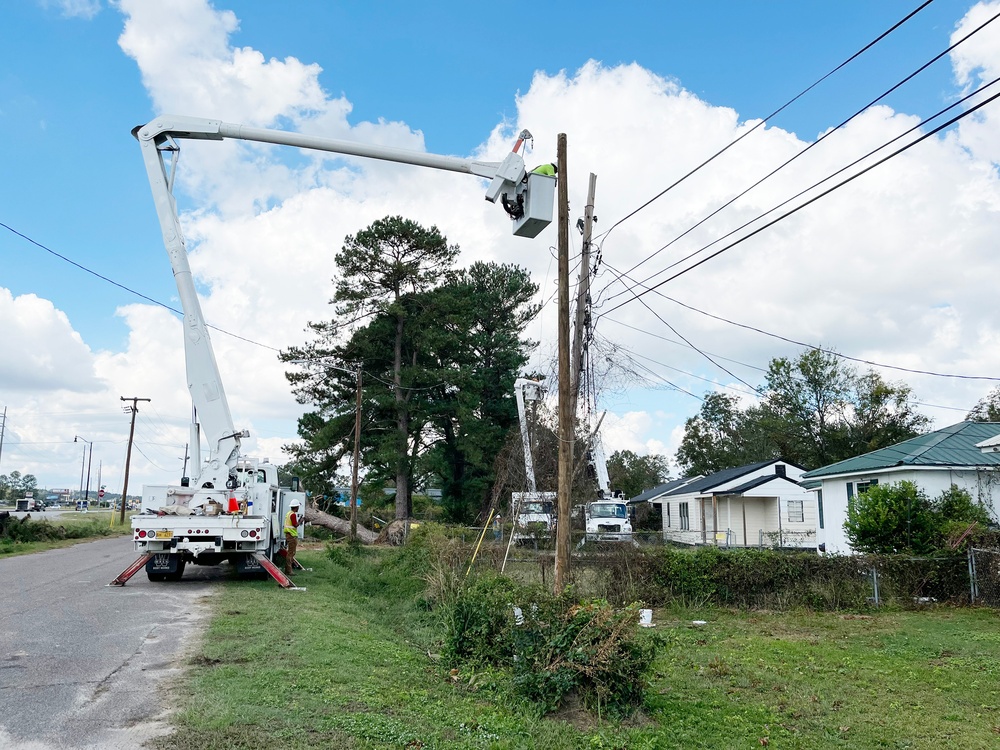
The outage was not a one-night event. On the evening of October 3, more than 33,000 customers in Richmond County and 24,000 in Columbia County were still without power. Georgia Power moved its 95-percent-restored target from October 5 to October 14, and Richmond County schools did not reopen until October 16. If you are new here and sizing a generator or a battery pack, size it for a week, not a night.
Why storms still hurt 140 miles inland
A hurricane is a heat engine, and warm ocean water is its fuel. Once it moves over land, it loses that fuel and weakens. That is the reassuring part. The rest, per National Weather Service science, is that all the moisture the storm already pulled up from the ocean does not vanish. It falls as torrential rain and flooding, sometimes for days and hundreds of miles from the coast, while damaging winds and tornadoes keep going too.
Two numbers make this concrete. About one in four deaths from hurricanes and tropical storms does not happen at the coast. And water, not wind, is the deadliest part of a tropical system: rainfall flooding, storm surge, high surf, and rip currents account for the majority of U.S. tropical cyclone deaths, with a large share of the rainfall-flooding deaths happening inland.
For Augusta specifically, the inland signature is trees. The CSRA's pine canopy is beautiful and, in 80-plus mph wind, a liability. Helene turned that canopy into the region's main hazard, which is why every storm plan here starts with your yard and your roof, not the river.
Tornadoes: the other question newcomers ask
Georgia averages about 30 tornadoes a year, according to the National Weather Service. Most are EF0 or EF1. The peak season is March through May, with April the single busiest month, and tornadoes have been reported in every month of the year, including during landfalling tropical systems.
The Georgia-relevant twist: tornadoes here are often wrapped in rain and hidden by the same hills and trees that make the region pretty, so you cannot count on seeing one coming. A NOAA weather radio with SAME technology, programmed for Richmond or Columbia County, is the cheapest reliable way to get a warning at 2 a.m. More on that in the prep list.
The newcomer prep list
Built from guidance by the Georgia Emergency Management and Homeland Security Agency, UGA Extension, and the Georgia Office of Insurance:
- Sign up for alerts. Augusta-Richmond County's Emergency Management Agency runs an emergency and weather alerting system; sign up so a warning reaches your phone. The CSRA Brief also sends storm closures and emergency alerts to the newsletter, with special editions when something big moves.
- Get a NOAA weather radio with SAME technology and program it for your county. The UGA state climatologist calls it the number one way to stay informed, and it works when the cell network does not.
- Build a kit for 3 to 7 days without power or clean water: at least one gallon of water per person per day for three days minimum, nonperishable food, a manual can opener, a battery or crank powered radio, a flashlight and extra batteries, a first aid kit, prescription medications, personal care items, pet food and water, an emergency phone charger, important papers in a waterproof container, and cash.
- Walk your yard before June. Trim dead limbs, and if a large pine leans over your bedroom, get an arborist's opinion before hurricane season, not after.
- Know your insurance. The Georgia Office of Insurance recommends reviewing your policies for storm, wind, and flood protection, inventorying your possessions with photos or video, and deciding whether you want actual cash value or replacement cost coverage. Standard homeowners policies do not cover flood damage.
- Keep vehicles fueled and secure outdoor objects, like grills and lawn furniture, when a storm is forecast.
- Learn the terms below. A watch means get ready. A warning means act now.
THE NEWSLETTER CATCHES WHAT THE GUIDE CAN'T
Storm closures, in your inbox when they matter.
This page is the evergreen version. The newsletter sends storm closures and emergency alerts, with special editions when a big storm moves. The inbox is the live version.
Free to read. Easy to leave. We never sell your email.
Storm terms, translated
| Term | What it means | What you do |
|---|---|---|
| Hurricane watch | Hurricane conditions possible in your area within 48 hours | Finish prep, charge everything, watch the forecast |
| Hurricane warning | Hurricane conditions expected within 36 hours | Stay inside, away from windows |
| Tropical storm | Sustained winds of 39 to 73 mph | Same prep as a hurricane, smaller margin |
| Tornado watch | Conditions favor tornadoes in your area | Know your shelter spot |
| Tornado warning | A tornado has been spotted or radar shows one | Get to an interior room on the lowest floor, away from windows |
These are the standard National Weather Service definitions. "Interior room on the lowest floor, away from windows" is also the tornado safety line worth memorizing.
Storm coverage from The CSRA Brief
This page is the evergreen version. The live version is the newsletter: The CSRA Brief sends storm closures and emergency alerts to subscribers, with special editions beyond the normal three-issue week when a big storm moves. The newcomer guide covers everything else about settling in, from utilities to car registration.
FAQ
Does Augusta GA get hurricanes?
Direct hits are rare. The University of Georgia's state climatologist says the probability of Georgia being directly hit in any given year is low. Inland impacts are the real story: both Irma (2017) and Helene (2024) brought tropical-storm-force winds and widespread outages to the CSRA.
Has a hurricane ever hit Augusta?
Helene is the modern benchmark. On September 27, 2024, its remains produced an 82 mph gust at Augusta Regional Airport, left about 95 percent of Richmond and Columbia County without power that morning, and killed 11 people across the three Georgia counties, all from trees falling onto homes.
Does Augusta GA get tornadoes?
Georgia averages about 30 tornadoes a year, per the National Weather Service, peaking March through May. Tropical systems can spawn them too. Because local tornadoes are often rain-wrapped, a NOAA weather radio is the reliable warning channel.
When is hurricane season in Georgia?
June 1 through November 30, per the National Hurricane Center. Tropical weather can arrive outside those dates, so treat the season as the minimum, not the limit.
Do I need flood insurance in Augusta?
Standard homeowners policies do not cover flood damage, and the Georgia Office of Insurance recommends reviewing your storm, wind, and flood coverage and inventorying your possessions before storm season. Check whether your home sits in a flood zone and ask your insurer what a flood policy would cost.
Should I evacuate Augusta for a hurricane?
Augusta sits about 140 miles inland, so storm surge is not the threat and the county does not order coastal-style evacuations for most storms. The plan is usually to shelter in place through the wind and the outage. Sign up for Augusta-Richmond County EMA alerts and follow their instructions; if officials tell you to leave, leave.
KEEP THIS GUIDE USEFUL
Storm figures are reported as measured or officially stated at the time, and recovery timelines reflect what actually happened after Helene. Alerts, insurance rules, and EMA systems change. When you find something newer or something that changed, send it in and the page gets fixed.